
Teach Kids Problem-Solving: Interactive Stories for Solutions

In the bustling world of young children, every day presents a myriad of tiny challenges. From deciding which toy to play with first to navigating friendship dilemmas at preschool, these early experiences are crucial for shaping their ability to tackle bigger problems later in life. As parents, we often want to swoop in and solve everything for them, but the true gift we can give our kids is the tools to find their own solutions. Fostering strong kids problem-solving skills from a young age is not just about helping them overcome immediate hurdles; it's about building resilience, critical thinking, and self-efficacy that will serve them throughout their lives.
But how do we teach such abstract concepts to little minds? The answer lies in engagement, exploration, and imagination. Traditional storytelling has always been a cornerstone of childhood development, but interactive stories elevate this experience, transforming passive listening into active participation. Imagine a world where your child is not just hearing a story, but actively shaping its outcome, making decisions, and seeing the direct consequences of their choices in a safe, imaginative environment. This engaging format provides a powerful platform for developing practical problem-solving skills, making learning an adventure rather than a chore.
The Unseen Power of Early Problem-Solving
Many parents instinctively understand that problem-solving is important, but its foundational role in a child's overall development is often underestimated. When children learn to solve problems, they're not just finding answers; they're developing a suite of interconnected cognitive and emotional skills. Consider a simple scenario: a child wants a cookie but can't reach the jar. Their problem-solving process might involve trying to climb, asking for help, or finding a stool. Each attempt, successful or not, teaches them valuable lessons about cause and effect, persistence, and seeking assistance when needed.
Beyond the immediate solution, strong kids problem-solving skills contribute to:
- Enhanced Critical Thinking: Children learn to analyze situations, identify obstacles, and think through potential solutions before acting.
- Increased Confidence and Independence: Successfully navigating challenges fosters a sense of accomplishment, encouraging them to tackle new problems with self-assurance.
- Better Emotional Regulation: When kids feel capable of solving problems, they are less likely to become frustrated or overwhelmed by minor setbacks.
- Improved Social Skills: Problem-solving often involves negotiation, compromise, and understanding others' perspectives, especially in group play scenarios.
- Creativity and Innovation: Finding unique solutions requires imaginative thinking and the ability to think outside the box.
In today's rapidly changing world, the ability to adapt and solve novel problems is more crucial than ever. By equipping our children with these skills early on, we are preparing them not just for school, but for life itself.
Interactive Stories: A Playground for Practical Solutions
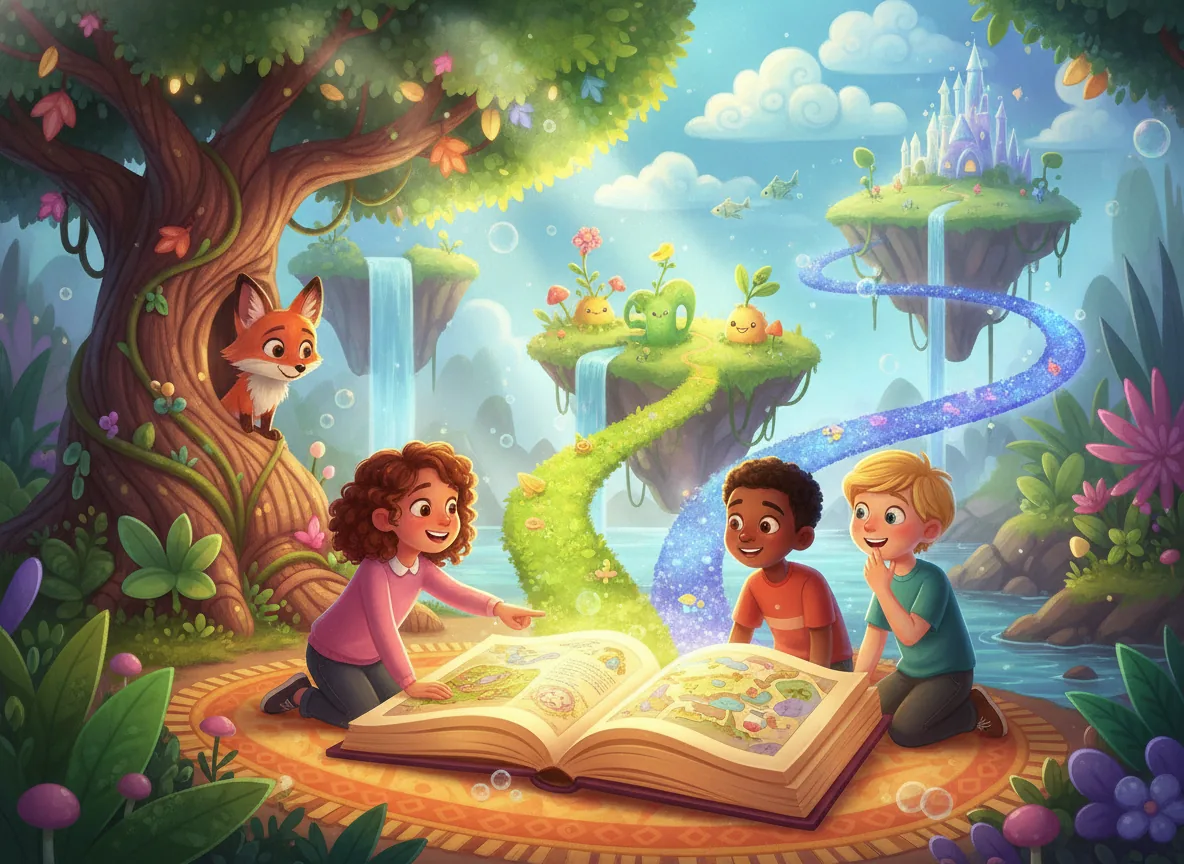
Enter interactive stories, the modern evolution of bedtime tales, designed specifically to engage young minds in dynamic decision-making. These stories, often presented in a choose-your-own-adventure format, place the child directly in the driver's seat. Instead of simply following a narrative, they are presented with choices at critical junctures, each leading to a different path and a unique set of outcomes. This immersive approach makes learning about consequences and cause-and-effect relationships incredibly tangible.
Imagine a scenario where a character faces a dilemma, like a friendly tiger named Siso who needs to cross a river. The story might present options: 'Should Siso try to jump across the narrowest part, look for a bridge, or build a raft?' Each choice leads to a different narrative branch. If Siso tries to jump, perhaps he gets his paws wet and learns a lesson about assessing risks. If he builds a raft, he might need to find materials, engaging the child in a mini-problem within the larger story. This direct connection between choice and consequence is invaluable for developing robust kids problem-solving skills.
Platforms like Twistale exemplify this approach, offering a library of stories where children dictate the plot. They aren't just hearing about a character's decision; they are the character, making the choices themselves. This direct agency empowers children to experiment with different strategies without real-world risk. They can see what happens if a character is kind, brave, thoughtful, or even a little bit silly. The beauty is that if a decision leads to an undesirable outcome, they can often 'rewind' or replay the story, choosing a different path to see if it yields a better result. This iterative process of trial and error, reflection, and adjustment is the very essence of effective problem-solving.
By making mistakes in a safe, fictional setting, children build confidence to make decisions in their real lives. They learn that problems often have multiple solutions, and that sometimes the first idea isn't the best one. This playful exploration reduces the fear of failure, encouraging a growth mindset essential for lifelong learning.
Maximizing Learning: Tips for Parents
While interactive stories are powerful tools on their own, parental involvement can significantly amplify their impact on developing kids problem-solving skills. Here's how you can make the most of this engaging learning method:
-
Engage in Pre-Story Discussions: Before diving into a story, briefly introduce the main character and their initial challenge. Ask your child, "What do you think [character] should do?" This primes their mind for problem-solving before the choices are even presented.
-
Pause and Ponder: When a choice point arises in the story (e.g., "Siso can go left or right. What do you think?"), pause. Don't rush their decision. Ask open-ended questions like:
- "What might happen if [character] chooses this option?"
- "What are the pros and cons of each choice?"
- "Which option seems safest/kindest/smartest? Why?"
Encourage them to articulate their reasoning, even if it's simple.
-
Discuss Consequences: After a choice is made and the story progresses, talk about the outcome. "Remember when Siso decided to build a raft? Look, now he's safely across! What do you think helped him do that?" Or, if a choice led to a less favorable outcome, discuss what could have been done differently without judgment: "Oh, Siso got wet! What could he have done instead?" This helps them connect their choices directly to the consequences.
-
Encourage Replaying and Experimentation: Remind your child that in interactive stories, they can always go back and try a different path. "What if we chose the other option? Let's see what happens then!" This teaches them that problems often have multiple solutions and encourages creative thinking.
-
Connect to Real-Life Situations: After the story, draw parallels to their own experiences. "Remember how Siso had to figure out how to cross the river? That's a bit like when you had to figure out how to share your toys with your friend. What did you do then?" This helps them transfer the abstract problem-solving skills learned in the story to concrete challenges in their daily lives.
-
Celebrate Effort, Not Just Outcomes: Praise their thinking process and effort, regardless of whether their chosen path led to the 'best' outcome in the story. "That was a really thoughtful idea to help Siso!" This reinforces the value of trying and thinking critically.
By actively participating in these interactive narratives, parents transform screen time or story time into a rich, educational experience that nurtures essential life skills. It's not just about entertainment; it's about empowerment.

Empowering children with robust kids problem-solving skills is one of the most valuable investments we can make in their future. Interactive stories provide a unique, captivating, and safe environment for them to practice these crucial abilities. By engaging with these narratives, making choices, and exploring consequences, young minds develop the resilience, critical thinking, and confidence needed to navigate the complexities of their world, one delightful adventure at a time. So, next time you settle in for a story, remember you're not just reading; you're building a foundation for a lifetime of successful problem-solving.