
Screen-Free Adventures: Boost Kids' Imagination & Language (2-7)
In our digital world, screens are everywhere, offering convenience but also concerns about their impact on young children (2-7). Parents often worry about screen time affecting focus, imagination, and crucial language development. It's a common challenge: balancing modern life with a child's innate need to explore, create, and interact hands-on.
Fortunately, fostering creativity and boosting language skills doesn't demand complex gadgets. The most powerful tools are often simple: our time, attention, and a commitment to nurturing curiosity. This post explores practical, engaging screen-free activities for kids that captivate attention and build a strong foundation for cognitive growth, emotional intelligence, and robust language. By embracing these shifts, you can transform everyday moments into boundless learning and imaginative play, ensuring your child thrives beyond the glowing screen.
Unleashing Imagination: Why Screen-Free Play Matters More Than Ever
Before the digital age, childhood was inherently screen-free. Kids built forts, told stories, explored nature, and invented games – all rich catalysts for development. Today, while screens offer passive entertainment, they often bypass active imagination. When children engage in screen-free activities for kids, they aren't just consuming content; they are generating it – becoming directors, writers, and actors of their own internal narratives. This process is vital for building strong cognitive pathways.
Consider the profound impact on a child's brain:
- Cognitive Development: Screen-free play encourages problem-solving, whether balancing blocks, strategizing in a game, or planning dramatic play.
- Language and Communication: Without a screen dictating pace, children articulate thoughts, negotiate, describe actions, and tell stories, expanding vocabulary and improving expressive communication.
- Emotional Intelligence: Direct interaction in play teaches empathy, sharing, turn-taking, and conflict resolution – fundamental social-emotional skills screens can't replicate.
- Creativity and Innovation: Without pre-programmed narratives, children invent. A blanket becomes a cave, a stick a magic wand, a box a spaceship. Open-ended play is the birthplace of original thought.
- Motor Skills: Physical play, building, drawing, and crafting develop fine motor skills, while outdoor play boosts gross motor coordination and physical health.
These benefits are foundational to a child's holistic development, preparing them for school and a lifetime of learning, adapting, and creating.
Practical Screen-Free Activities for Language and Creativity
Replacing screen time means offering compelling, engaging alternatives. Here are some of the best screen-free activities for kids aged 2-7, designed to supercharge imagination and language:
- Interactive Storytelling: Beyond reading a book, this engages children actively.
- Collaborative Story Chains: Start a story, then each family member adds a sentence, building a narrative together. This fosters listening, turn-taking, and imaginative contribution.
- "What Happens Next?" Games: Read part of a familiar story and ask your child to predict or invent the next segment, boosting critical thinking and narrative generation.
- Choose-Your-Own-Adventure Narratives: Offer choices as you tell a story: "Does Siso the tiger go into the dark cave or climb the tall tree?" The child's decision guides the plot, making them active participants. Platforms like Twistale exemplify this, creating dynamic story experiences where children's choices enhance engagement and descriptive language as they imagine outcomes.
- Role-Playing and Dramatic Play:
- Dress-Up Box: Old clothes, scarves, and hats transform children into characters. Encourage them to narrate actions and interactions.
- Puppet Shows: Hand puppets or decorated socks spark conversations and character voices, enhancing vocal expression.
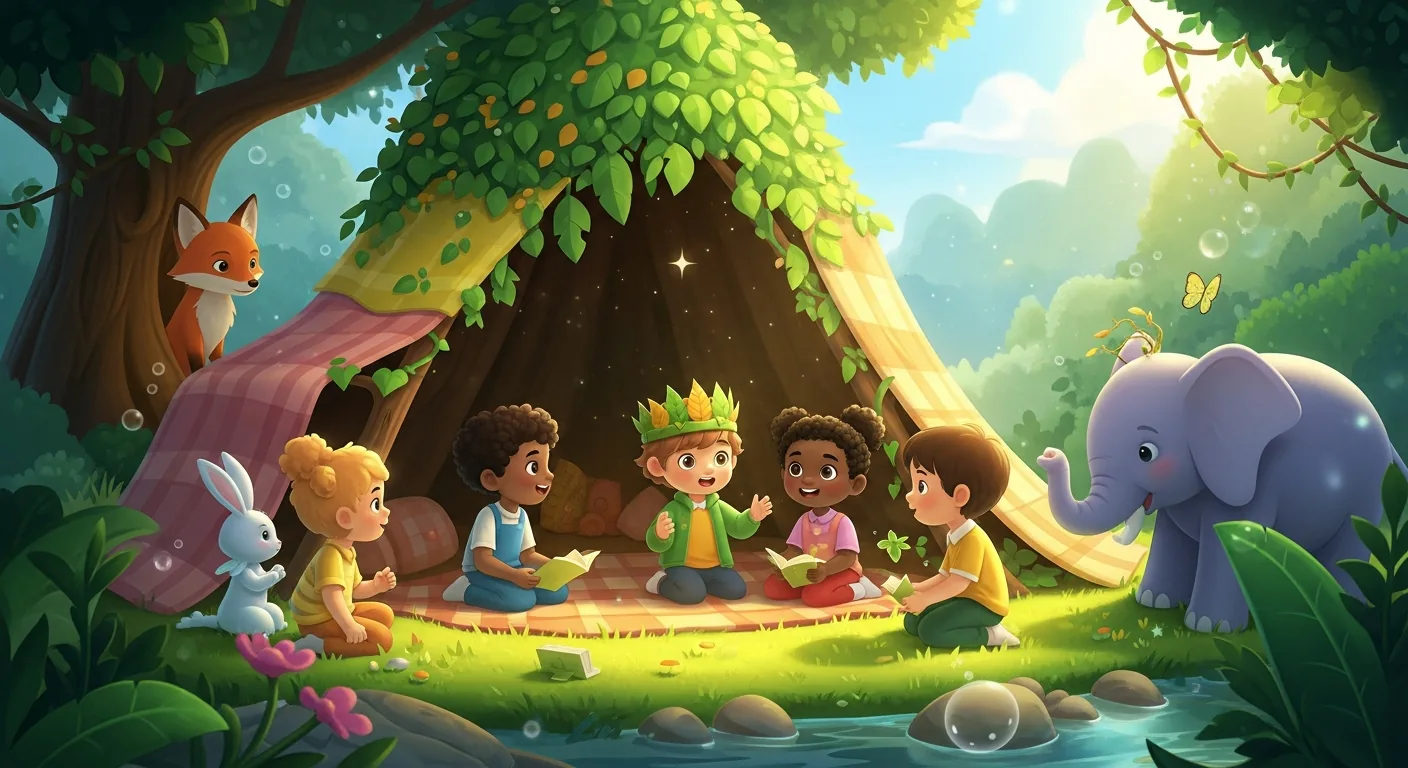
- Build a Fort, Create a World: Blankets and pillows become spaceships or castles, naturally inviting imaginative scenarios and dialogue.
- Sensory and Exploratory Play:
- Playdough Adventures: Use playdough to create characters or landscapes. Ask, "What does that feel like? What is its story?"
- Nature Exploration: A park walk can become a "bug hunt" or a search for "treasure." Encourage describing what they see, hear, and touch.
- Water Table Fun: Water with scoops and plastic animals offers imaginative play and descriptive language ("splashy," "slippery," "deep").
- Creative Arts and Crafting:
- Drawing and Painting: Encourage children to describe their artwork. "Who is this? What are they doing?" connects visual creation with verbal storytelling.
- Junk Model Making: Provide recycled materials. Ask them to invent something new and describe its function.

Making the Switch: Tips for Reducing Screen Time Effectively
Transitioning to more screen-free activities for kids can be challenging, but achievable with patience. Here are strategies for a smoother switch:
- Start Small: Designate specific screen-free hours or days, rather than attempting to go cold turkey.
- Offer Alternatives: Have engaging options ready. Before turning off a screen, suggest an activity: "Let's build a fort!" or "Adventure with Siso the tiger!"
- Lead by Example: Children observe. Put away your own devices during family and play times. Model active engagement.
- Create a "Yes" Environment: Make imaginative play easy to access. Keep craft supplies, a dress-up box, and books readily available.
- Involve Them: For older children (5-7), discuss screen time limits and the benefits of other activities to encourage cooperation.
- Manage Expectations: Expect initial resistance. Acknowledge their feelings, but stand firm. Use distraction and gentle redirection.
- Plan Ahead: Have a list of screen-free activities for weekends or breaks to prevent boredom-induced screen requests.
- Make it Routine: Integrate screen-free time into your daily schedule. Consistency helps children adapt.
The goal isn't necessarily to eliminate screens, but to ensure they don't overshadow the vital role of imaginative, interactive, and language-rich play. Prioritizing these experiences invests in a future where your child is not just entertained, but truly engaged, creative, and articulate.

Embracing screen-free activities for kids opens a world of imagination, creativity, and profound language development. From collaborative stories to choose-your-own-adventure journeys with characters like Siso the tiger, these moments are building blocks for a well-rounded, articulate individual. By integrating these experiences daily, parents can powerfully shape their children's cognitive and emotional landscape, fostering a lifelong love for learning. The greatest adventures often begin when the screen goes dark, revealing the bright spark of a child's own mind.